Read Product Review CyberServe EPYC EP1-102A
A powerful AMD EPYC rack server for small spaces
Dave Mitchell August 26, 2026 |
Configure From R46,845.48 or Configure
A powerful AMD EPYC rack server for small spaces
Dave Mitchell August 26, 2026 |
Configure From R46,845.48 or Configure

SMBs seeking a powerful single-socket rack server that'll fit in the smallest of spaces will find Broadberry is offering a tempting proposition. Presented as an ultra-short-depth 1U rack system, the CyberServe EPYC EP1-102A packs a lot into its compact dimensions.
Targeting SMBs and workloads such as edge computing and web hosting, Broadberry offers it with a good choice of AMD EPYC 4004/5 CPUs, and it can handle up to 192GB of fast DDR5 memory. It has another trick up its sleeve as its single PCIe slot supports an Nvidia Quadro RTX A1000 or A400 GPU card for lightweight AI and rendering duties.
Remote server monitoring comes as standard, as the CyberServe sports an integrated AST2600 BMC (baseboard management controller) with a dedicated Gigabit port. You can also manage and monitor multiple servers with the Asus Control Center Express (ACCE) utility providing a centralised dashboard.
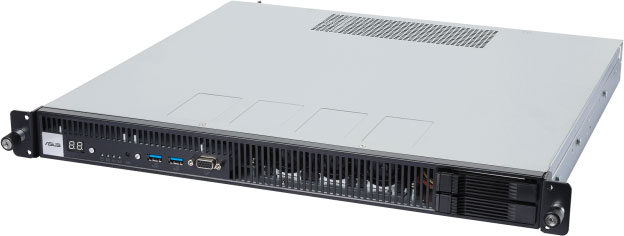
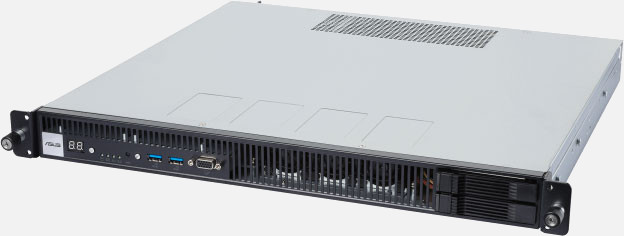
The CyberServe showcases the Asus ExpertCenter Pro ER100A B6 1U rack platform. The chassis is solidly constructed, and removing the lid reveals a smartly designed and tidy interior affording easy access for upgrades and maintenance.
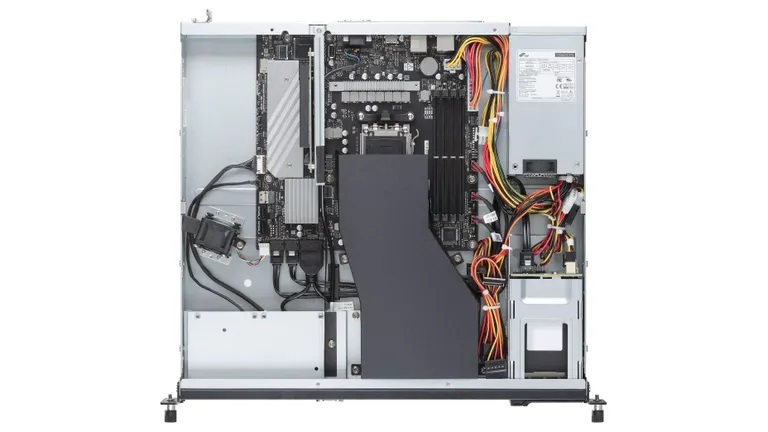
Broadberry supplied our system with a meaty 16-core 3GHz AMD EPYC 4545P topped off with a chunky passive heatsink. Flanked on one side by four DIMM slots, it came with one occupied by a 32GB DDR5 UDIMM module.
Cooling is handled efficiently by a central bank of three dual-rotor fans in front of the motherboard with a plastic air shroud directing air over the CPU's heatsink. We noted that the shroud is secured in place with four screws – many similar short-depth Supermicro rack servers we've seen leave their flimsy air shroud loose, with only the lid keeping it in place.
Another cooling fan sits to the left of the chassis and is angled in to push air over the PCIe expansion slot. All told, we found the server ran very quietly, making it a good choice for small office environments.
The rear panel presents dual 2.5GbE multi-Gig ports, and if you feel the need for more speed, Broadberry offers 10GbE, 25GbE and 100GbE PCIe adapters. You're spoilt for choice if you want to connect a local monitor, as the server offers VGA ports fore and aft, while the rear 10GbE 3.2 Gen 2 port supports DP Alt-Mode for piping output to an HDMI-enabled monitor.
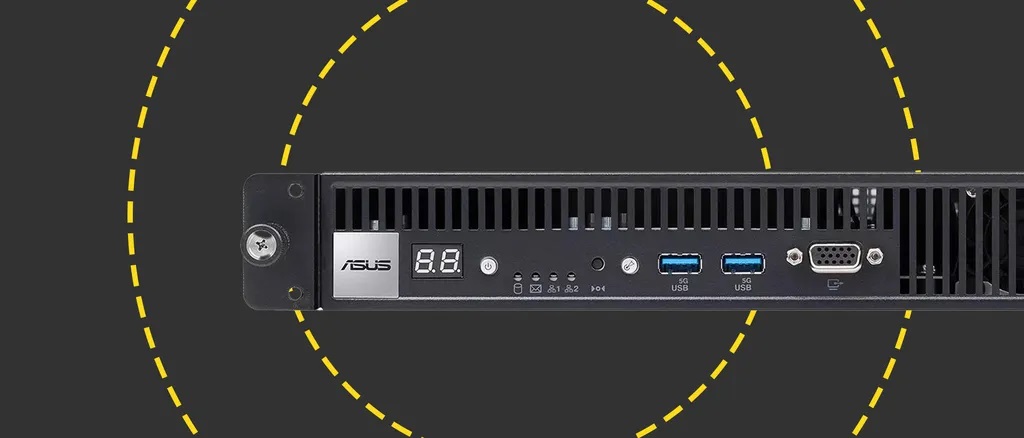
The front panel also has a handy 2-character Q-code LED display. This provides a running status tally as the server boots up and warns if any errors are detected – the manual provides a full list of Q-codes and their meaning.
Standard storage features are fairly simple, with the base system offering two hot-swap SFF bays at the front with the backplane cabled directly to the motherboard's embedded SATA ports. Drives are easily added by snapping them into the tool-free carriers, and it's worth noting that unlike the blue-chips, Broadberry allows you to install your own choice of storage devices without invalidating the warranty.
Further storage expansion is possible as the server has an extra internal tray behind the front air grill that accepts two fixed SFF devices. Power cables are already provided, and with spare SATA and SlimSAS ports on the motherboard right next to the tray, you can cable up SATA or U.2 NVMe drives.
The system was supplied with a 2TB Micron 3500 M.2 NVMe SSD installed in the single motherboard slot beneath the expansion bay. A nice touch is that the SSD is completely covered with a large aluminium heatsink, which also gets the benefit of the expansion bay cooling fan.
Broadberry offers a range of optional Broadcom SATA/SAS RAID adapters, but the AMD chipset does have embedded RAID capabilities, which come into play when you change the BIOS SATA settings from AHCI to RAID. Arrays can be created and managed using AMD's RAIDXpert2 utility, which is available for Windows Server 2022/2025. We dropped a couple of WD Red SATA SSDs in the front bays and had no problems using RAIDXpert2 to create a software-managed mirrored array.
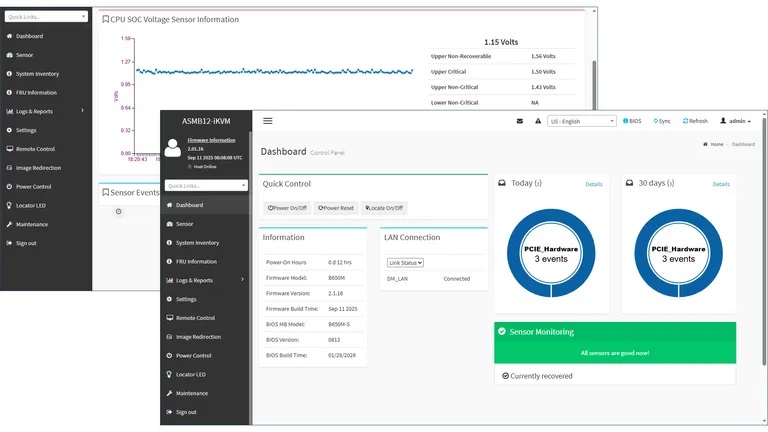
The server's embedded AST2600 IPMI controller and dedicated Gigabit port offer a tidy web interface packed with plenty of information on system health and critical components. It isn't as feature-rich as Dell's iDRAC or HPE's iLO controllers, but its dashboard provides an overview of all the latest events, and you can pull up graphs of hardware sensor data, define thresholds for each one, and link them up with email alerts if any are breached.
Firmware upgrade tools are provided along with remote power controls, and the controller's built-in firewall provides options to create IP address and port-based protection rules. Unlike Dell and HPE, the IPMI controller includes full OS remote control and virtual media services as standard features and not as chargeable licence upgrades.
The ACCE software is available for Windows and Linux hosts and is used to manage multiple servers from a single console. A licence code is included on a card in the server's accessory box, and we loaded ACCE on a Windows Server 2025 host.
ACCE focuses primarily on managing Windows and Linux endpoints and offers a remote agent deployment tool. Systems with agents appear in the main dashboard page where you can view their hardware sensors and perform a variety of tasks such as running BIOS and driver updates and system inventory.
The management controller section scans for BMC devices, and after discovering the CyberServe's AST2600, it presented a list of tasks including pulling up hardware sensor details, updating the BMC's firmware, and loading event logs. As far as we can see, BMC monitoring doesn't need a licence, which is only required for each agent deployment.
With a price tag for the system on review of £3,656 excluding VAT, Broadberry's CyberServe EPYC EP1-102A is offering a very affordable alternative to the blue chips. It comes up a little short in the storage department, but it is available with a good choice of EPYC CPUs, has a big memory capacity, supports an optional GPU, and its short-depth chassis can go places most other servers can't.
| System | 1U Asus ExpertCenter Pro ER100A B6 |
| Motherboard | Asus B650M-S |
| CPU | 16-core 3GHz AMD EPYC 4545P |
| Memory | 32GB 4,800MT/s DDR5 UDIMM (max 192GB) |
| Storage bays | 2 x SFF SATA hot-swap drive bays , 2 x SATA/NVMe with internal tray |
| Other storage | 1 x M.2 2242/2260/2280 PCIe Gen5 slot |
| RAID | RAID0, 1 10 with AMD RAIDXpert2 |
| Storage included | 2TB Micron 3500 Gen4 M.2 NVMe SSD |
| Network | 2 x 2.5GbE multi-Gigabit |
| Expansion | PCIe Gen5 x16 slot |
| Other ports | Rear: USB-C 3.2 Gen2 (DP Alt mode), USB-A 3.2 Gen2, 2 x USB-A 2.0, VGA, serial COM. Front: VGA, 2 x USB-A 3.2 Gen1 |
| Power | 1 x fixed 500W Gold PSU |
| Management | Aspeed AST2600 BMC with Gigabit, Asus Control Center Express |
| Warranty | 3yrs RTB |

CyberServe EPYC EP1-102A
A powerful AMD EPYC rack server for small spaces...
| August 26, 2026
CyberServe Ryzen RY1-104A
A core-heavy Ryzen rack server at an entry-level price ...
| April 01, 2024
CyberServe Xeon SP1-102G NVMe G5
A small, powerful, and affordable rack server.
Broadberry gets edgy with a great value rack server...
| December 01, 2023
Intel M50CYP2UR208 Coyote Pass Server - 8 Drive Bays. SAS/SATA/NVME
A mighty server package for the price with a big helping of blisteringly fast Intel Optane 200 PMEMs...
| August 02, 2021
 Call Our South African Sales Team Now